
Amazon Injury Data by Geography
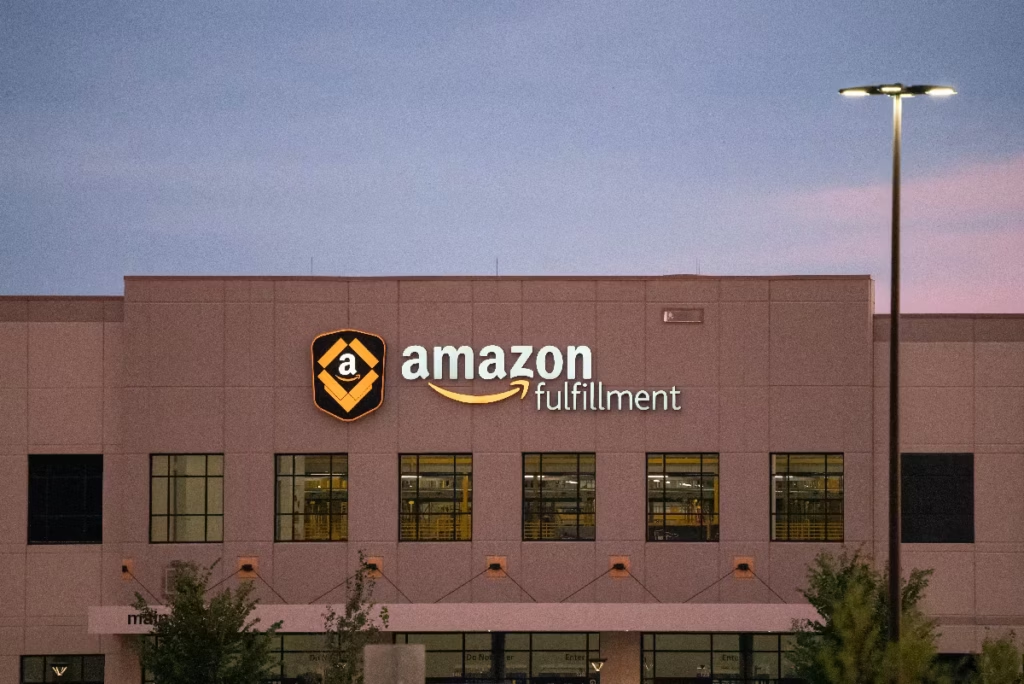
The Amazon Fulfillment Center (FC) in Shakopee, Minnesota (MSP1) in the Twin Cities region. © Tony Webster (CC 2.0)
About This Data
The figures in this dashboard are based on 2025 injury and illness data reported by Amazon and collected and published by the Occupational Safety and Health Administration (OSHA). The dashboard only displays data for facilities classified under NAICS 493110, primarily fulfillment centers and other warehousing operations, where Amazon employers and non-Amazon employers each reported at least 500 FTEs in 2025. Facilities classified under NAICS 492110, which primarily includes delivery stations and sortation centers, are excluded for the reasons described in the methodology. Geographies included in this dashboard are limited to those where both Amazon and non-Amazon employers meet the minimum employment threshold specified in the methodology.
The figures on this dashboard are only a partial picture of the total injuries sustained by warehouse workers. The data only includes injuries reported by Amazon and other employers to OSHA and excludes injuries that employers deemed non-recordable. Of note, a 2024 US Senate probe and resulting report concluded that Amazon’s policies and practices may work to suppress the reporting of all work-related injuries to OSHA.

Methodology
All figures displayed in this dashboard are calculated from injury data that Amazon and other warehouse employers recorded on OSHA Form 300 and OSHA Form 300A for 2021 through 2025. Employers report data annually to OSHA and the agency makes these data publicly available through its establishment-specific injury and illness data portal, available here.
Injury rates are calculated using aggregate injury and illness counts and total employment across all establishments within each geography, rather than as simple averages of injury rates from establishments within those geographies.
This dashboard displays injury data for facilities that report under NAICS code 493110, General Warehousing and Storage. Amazon also reports injury data for certain warehousing and logistics facilities under NAICS code 492110, Couriers and Express Delivery Services. However, the latter records are excluded from this dashboard because direct cross-industry comparisons of Amazon’s facilities reported under NAICS code 492110 can be misleading since the nature of the work differs significantly between Amazon and non-Amazon employers in this NAICS code. Injury data from non-Amazon establishments in the 492110 NAICS code typically include injuries from both warehouse workers and delivery drivers. However, Amazon’s injury data in this code only accounts for injuries from warehouse workers and excludes those from its delivery drivers because of the company’s use of delivery service partners and its Amazon Flex program, which means Amazon is not the employer of record for the drivers who deliver Amazon packages.
Injury data published by OSHA includes annual average employment and total hours worked for all employees at each facility for each year. OSHA’s data validation guidance specifies that an establishment’s total hours worked divided by its annual average employment must not exceed 8,760 hours.[1] This analysis excludes facility records that exceed this threshold.
The dashboard only displays figures for individual geographies when the total number of FTEs reported by Amazon and non-Amazon employers meets a minimum threshold of 500 FTEs. Metro area definitions correspond to metropolitan and micropolitan statistical areas delineated by the US Office of Management and Budget according to standards that are applied to US Census Bureau data.[2]
Except for median number of lost time or light duty days, all figures in this dashboard are calculated from Summary Data files (Form 300A) released annually by OSHA, which correspond to establishment-level injury and illness data reported by employers. Median number of lost time or light duty days is calculated from the Case Detail Data (Form 300), which consists of records for individual cases reported in the summary files. Case Detail Data are a subset of the Summary Data and account for about 96% of the cases reported for 2025, the only years for which OSHA has made these data publicly available for download.
Facility address information was standardized and geocoded using Geocodio. Geocodio was also used to enrich each record with geographic attributes not included in OSHA’s raw data, including county, metropolitan statistical area, and congressional district. Geocoding results for Amazon facilities were individually reviewed to confirm correct mapping to each facility’s physical location. Non-Amazon facilities were not reviewed individually, except for 46 facilities where the state identified by Geocodio differed from the state listed in the source data.
Note on Amazon Injury Data Underreporting
A 2024 investigation by the US Senate Committee on Health, Education, Labor, and Pensions concluded that Amazon’s policies and practices may operate to reduce the number of injuries classified as OSHA-recordable.[3] Among the evidence cited, the Committee pointed to internal injury logs where the company records all injuries, not just those reported to OSHA. In one example at a facility in Texas, the Committee found that the company recorded 437 injuries in its internal log but only reported 31 (7%) of those injuries to OSHA.[4] In its assessment of this data, the Committee concluded that the large discrepancy between Amazon’s internal injury logs and the injury data reported to OSHA suggests that Amazon had failed to properly classify some of those injuries as OSHA-recordable. The Committee’s report also cites other evidence from worker interviews, documents provided by the Amazon to the committee and OSHA citations to support its findings.
[1] https://www.osha.gov/sites/default/files/osha_ita-estab-and-summary-csv-documentation_revised.pdf
[2] https://www.census.gov/programs-surveys/metro-micro/about.html
https://www.geocod.io/convert-latitude-longitude-or-address-to-regional-urban-areas/
[3] United States Senate Committee on Health, Education, Labor, and Pensions, The “Injury-Productivity Trade-off” at 117-123 (December 2024).
[4] United States Senate Committee on Health, Education, Labor, and Pensions, The “Injury-Productivity Trade-off” at 123 (December 2024).








Share your story
Do you currently work or have you worked at an Amazon facility? Have you experienced productivity rate pressure or other working conditions that threatened your health and safety? Have you suffered an injury on the job? You are not alone. Share your story with us today.
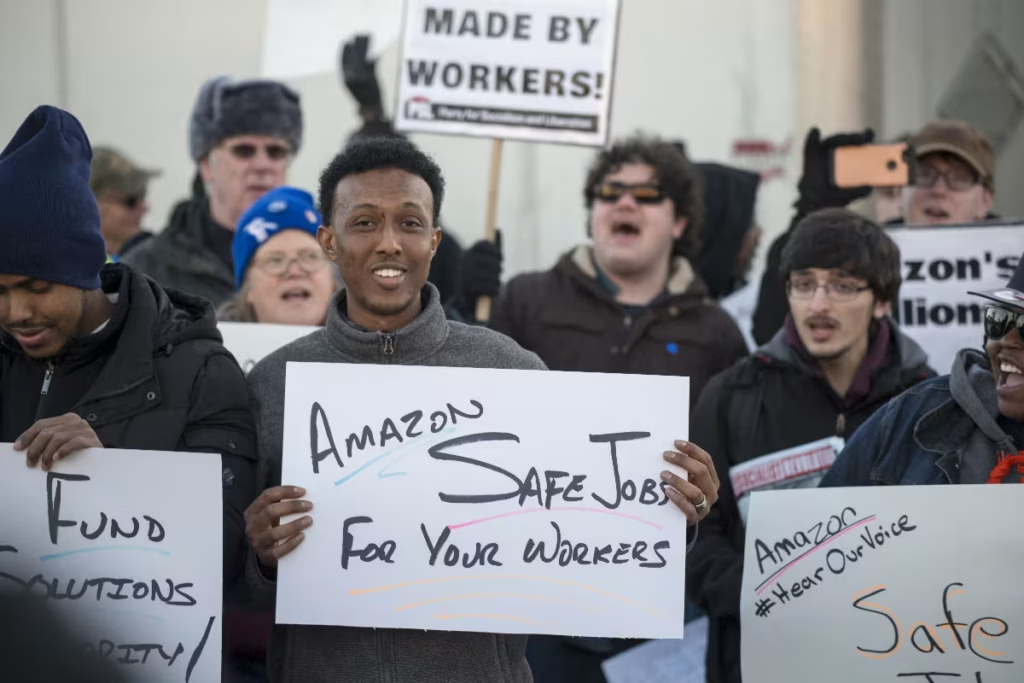
East African worker protest against Amazon © Fibonacci Blue (CC 2.0)