
Find Your Amazon Facility’s Injury Data
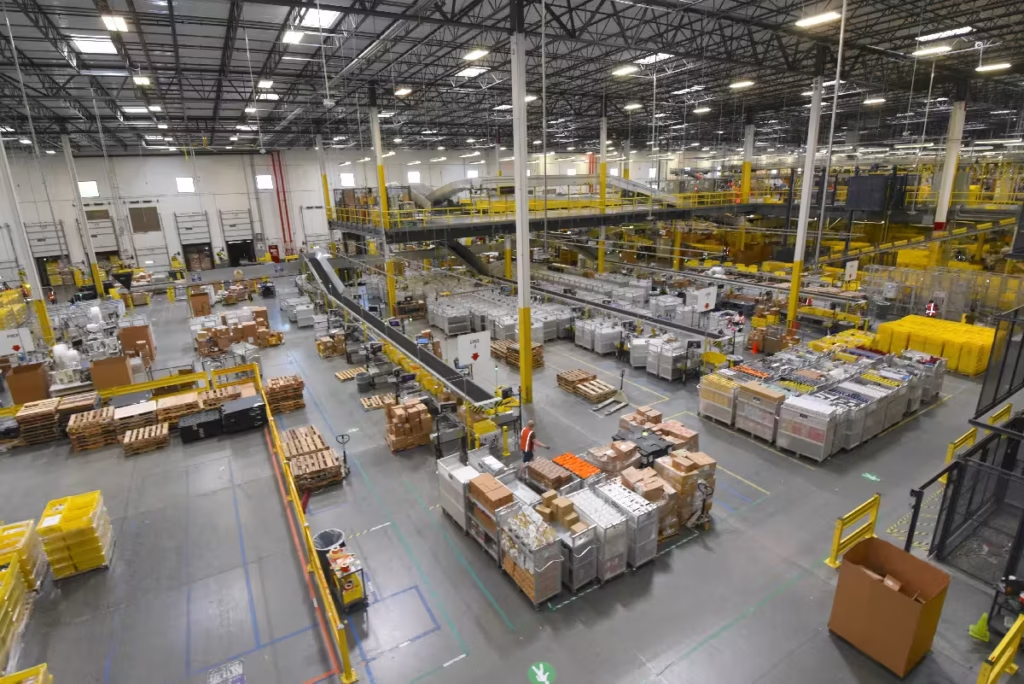
Amazon Tour © Maryland GovPics (CC 2.0)
About This Data
The figures on this dashboard are only a partial picture of the total injuries sustained by Amazon workers. The data only includes injuries reported by Amazon to OSHA and excludes injuries the company deemed non-recordable. In addition, a 2024 US Senate probe and resulting report concluded that Amazon’s policies and practices may work to suppress the reporting of all work-related injuries to OSHA.
💡Don't know your facility code?
Facility Lookup Tool
Methodology
All figures displayed in this dashboard are calculated from injury data Amazon recorded on OSHA’s injury and illness recordkeeping forms, Forms 300 and 300A, from 2021 through 2025. Amazon reports data annually to OSHA, who makes these data publicly available through its data portal, available here.
This dashboard only displays injury data for facilities that are part of Amazon’s warehousing and logistics operations, which the company reports under NAICS code 493110 (General Warehousing and Storage) and NAICS code 492110 (Couriers and Express Delivery Services).
The dashboard only displays facility-level injury data for facilities that had at least 20 full-time equivalent (FTE) employees for the selected year. Injury rates at facilities with fewer than 20 FTE employees may appear distorted. The SOC does not exclude these facilities when calculating injury rates for geographic units larger than the facility level – including the national injury rate or for the geography-based dashboard.
With the exception of median days away from work, restricted or transferred (DART), all figures in this dashboard are calculated from Summary Data files (Form 300A) released annually by OSHA, which correspond to establishment-level injury and illness data reported by employers.
Median DART is calculated from OSHA Case Detail Data collected through OSHA Form 300. These case-level records are a subset of the Summary Data published by OSHA and represent approximately 83% of the injury cases included in OSHA’s summary files for 2025, the most recent year for which OSHA has made detailed case data publicly available for download. The figure is calculated only from DART cases. For each DART case, the total number of lost time or light duty days is summed up, and the median is the midpoint across all such cases. When the number of cases is even, the median is calculated as the average of the two middle values. If the dashboard displays an N/A value, it means that OSHA did not release the facility’s detailed case data or the facility did not record any DART cases.
As part of preparing the data for publication in this dashboard, the data was geocoded and the facility address information was standardized. Facility type is drawn from datasets compiled and published by Benjamin Y. Fong and MWPVL. These two datasets are not official and have not been verified by the SOC.
Note on Amazon Injury Data Underreporting
A 2024 investigation by the US Senate Committee on Health, Education, Labor, and Pensions concluded that Amazon’s policies and practices may operate to reduce the number of injuries classified as OSHA-recordable.1 Among the evidence cited, the Committee pointed to internal injury logs where the company records all injuries, not just those reported to OSHA. In one example at a facility in Texas, the Committee found that the company recorded 437 injuries in its internal log but only reported 31 (7%) of those injuries to OSHA.2 In its assessment of this data, the Committee concluded that the large discrepancy between Amazon’s internal injury logs and the injury data reported to OSHA suggests that Amazon had failed to properly classify some of those injuries as OSHA-recordable. The Committee’s report also cites other evidence from worker interviews, documents provided by the Amazon to the committee and OSHA citations to support its findings.
1: United States Senate Committee on Health, Education, Labor, and Pensions, The “Injury-Productivity Trade-off” at 117-123 (December 2024).
2: United States Senate Committee on Health, Education, Labor, and Pensions, The “Injury-Productivity Trade-off” at 123 (December 2024).







Share your story
Do you currently work or have you worked at an Amazon facility? Have you experienced productivity rate pressure or other working conditions that threatened your health and safety? Have you suffered an injury on the job? You are not alone. Share your story with us today.
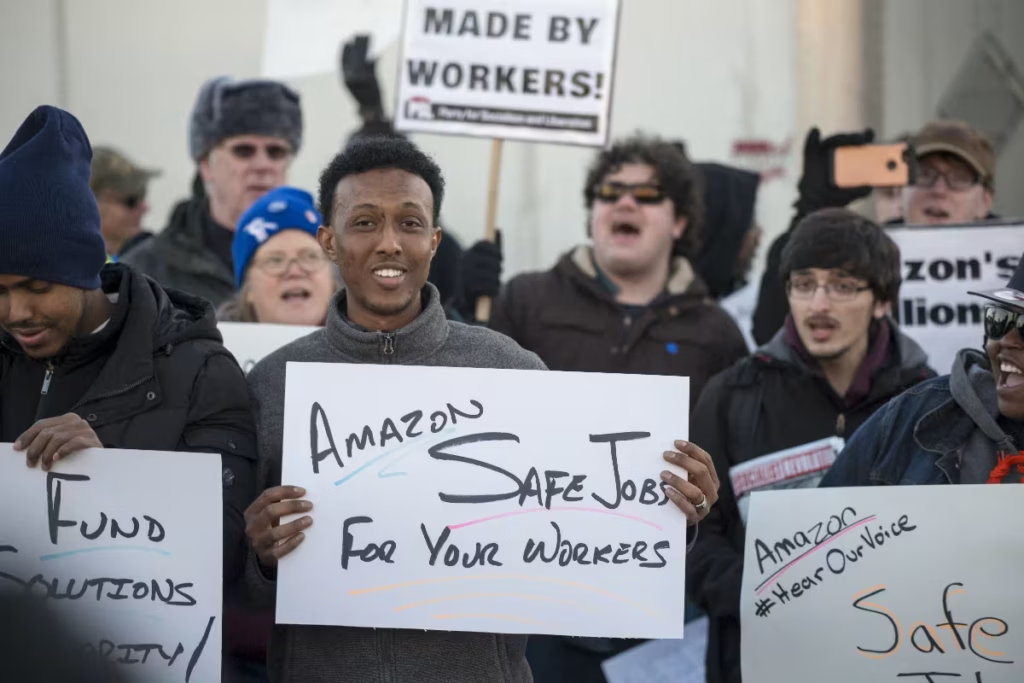
East African worker protest against Amazon © Fibonacci Blue (CC 2.0)